

Growing up, many of us heard, “don’t care what people think.” That’s solid advice for self-worth—but bad advice for cooperation, which is how long games are won. The trick isn’t chasing approval; it’s shaping expectations so others can reliably cooperate, invest, and stick around. In short: ignore judgments; manage signals.
There’s “who am I?” (dignity) and “what do people expect from me next time?” (reputation). Dignity is internal—don’t hand it to the crowd. Reputation is external—it’s the pattern others use to decide if teaming up is smart or dumb. One protects identity; the other unlocks allies.
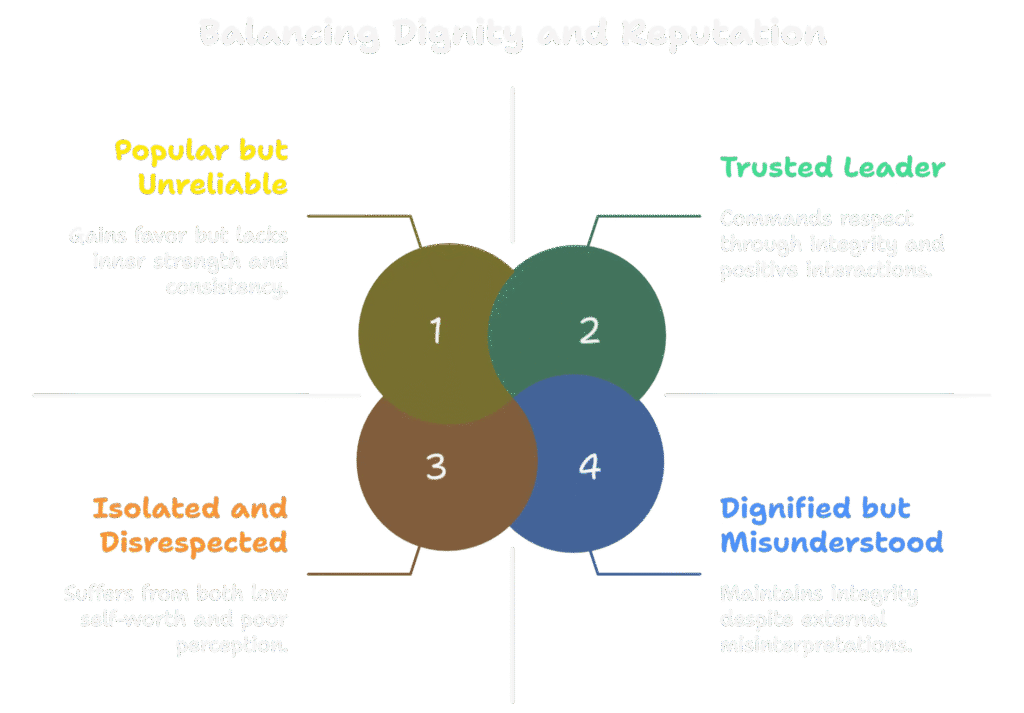
The repeated-game reality
In one-off moments, caring about being liked doesn’t buy much. But life isn’t one round—it’s teams, clients, friends, neighbors—again and again. In those repeats, actions teach people what to expect next time. That’s why simple rules like “be nice first, answer unfairness once, forgive a real fix, stay consistent” end up beating clever tricks over time.
Noise, misunderstandings, and grace
Real life is messy. Messages get missed. Someone’s tired and snaps. If the reaction is permanent payback, everything spirals. A better move: give one clean response to a bad hit, then test for cooperation again. If it was a blip, reset. If it wasn’t, they’ll show it—and there’s the answer.

Signals beat speeches
Trust doesn’t come from big promises; it comes from patterns. Start cooperative. Match behavior. Forgive once. Keep boundaries visible. Do that and people can coordinate around the “focal point” of what to expect without a lot of negotiation. Less applause chasing, more “this is how I play—count on it.”
A simple playbook
- Be nice first: open with cooperation to invite it back.
- Be provokable: respond once to defection; don’t be a soft target.
- Be forgiving: reset after remorse to avoid escalation.
- Be clear: make reactions legible so cooperation is the dominant move.

How to apply this week
- Replace “Will they like me?” with “What will this teach them to expect next time?” Expectations are the multiplier on future outcomes.
- Make a visible promise and keep it—deadlines, ownership, follow-up—so people can coordinate around one’s word.
- When a slight happens, apply one measured response, then test for cooperation again—don’t lock into tit-for-tat forever.
- Choose one consistent behavior (e.g., “always close the loop within 24 hours”) and let it become the focal point colleagues align around.
If it still feels like caring what people think…
Reframe it: this isn’t about performing for approval; it’s about being predictable to partners. Approval is weather; reputation is climate. The goal isn’t to be liked; it’s to be legible. That’s how cooperation compounds.
Optional opening lines
- “I grew up on ‘don’t care what people think.’ Then life handed me teams and deadlines—and suddenly what people expected of me decided whether anything got done.”
- “Freedom comes from ignoring opinions; progress comes from managing expectations. The trick is knowing which game is being played.”
- “If life is a repeated game, reputation isn’t vanity—it’s infrastructure.”
The closing question
Which belief about oneself would be worth being disliked for today—because it makes cooperation possible tomorrow?